



Brazil’s suspension from the European Union beef market is unlikely to have a major impact on export volumes, but it removes a key price anchor for premium cuts and could hurt the image of Brazilian beef abroad.
The restriction, which took effect Thursday, Sept. 3, cuts Brazil off from its highest-paying major market. EU buyers spent $1 billion on 128,000 metric tons of Brazilian beef last year, making the bloc the country’s fourth-largest export market by revenue and its top destination by average price, according to data compiled by beef exporters association Abiec.
Brazilian beef was sold to the EU for an average $8,200 per metric ton in 2025, 57% above the $5,200 average across all Brazilian exports.
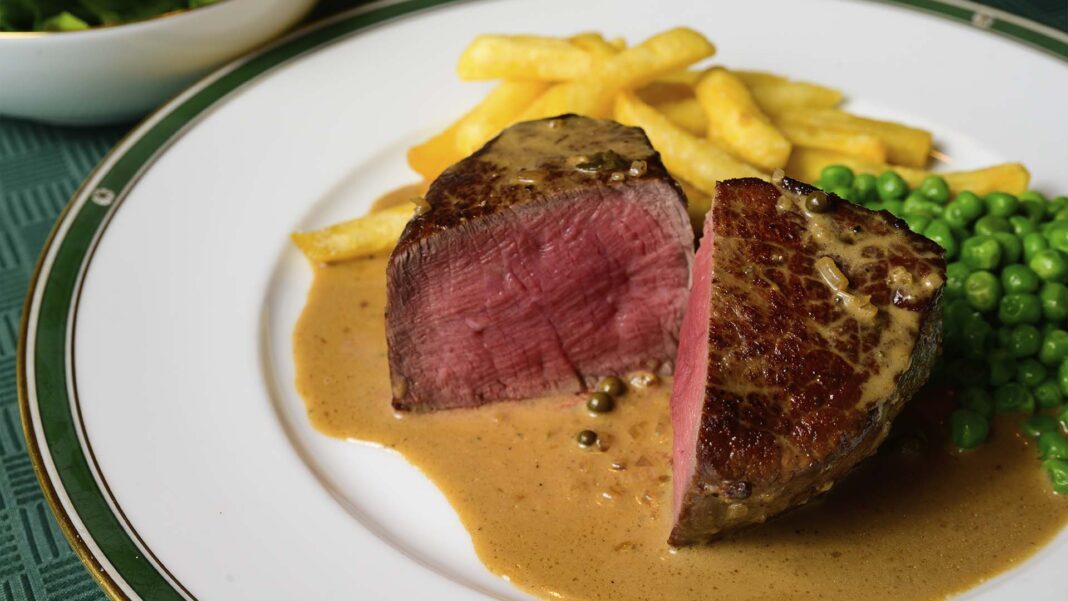
The premium reflects the product mix. European buyers typically import high-value rump-and-loin cuts, including tenderloin, striploin and rump, as well as topside, which is widely used in Italy to make bresaola.
“Brazil is losing its price anchor for premium cuts,” said a person in the export industry with knowledge of the market, who asked not to be identified because the matter is commercially sensitive.
Alongside China, which buys a broader and different mix of cuts, the EU helps set the benchmark for cattle destined for export.
European shipments accounted for only 4.4% of Brazil’s total beef exports in 2025, meaning meatpackers are expected to find alternative markets for the displaced volume, particularly amid tight global beef supplies. Matching European prices, however, will be difficult.
Impact on European Prices
The suspension could also push up beef prices in Europe. In Argentina, expectations that Brazil would be removed from the list of countries authorized to supply the EU have already fueled speculative buying, driving prices for some cuts as much as 50% higher, according to a person familiar with the market.
Brazil was far from a marginal supplier to Europe. The country accounted for about 35% of the EU’s imported beef last year, according to Abiec data.
Dependence is even greater for certain cuts and markets. Italy, the biggest European buyer of Brazilian beef last year, has no obvious replacement for Brazil in the topside used to make bresaola.
Nellore cattle, the dominant breed in Brazil, are particularly suited to that product because of their relatively low marbling. Argentina, Uruguay and Australia rely more heavily on European cattle breeds, which generally have more intramuscular fat.
“They will feel Brazil’s absence,” said another person with knowledge of the market.
Even if tighter supply pushes European prices higher, Brazil’s return to the EU’s authorized-supplier list could take years.
Two-Year Path Back
The most optimistic industry estimates suggest Brazilian meatpackers could resume exports to the EU in about two years if the approval process goes smoothly. That roughly matches the breeding, backgrounding and finishing cycle for cattle under the most efficient production systems.
Brazil needs to establish a production-segregation protocol acceptable to European authorities, demonstrating that antimicrobials are not used in animals whose beef is destined for the bloc.
Abiec has developed such a protocol in partnership with ABCAR, Brazil’s association of auditing and traceability certification companies, and CNA, the Brazilian Confederation of Agriculture and Livestock.
The initiative is expected to support a proposal from Brazil’s Agriculture Ministry to European authorities. Beef, however, is likely to move up the ministry’s priority list only after restrictions affecting products including chicken and honey are addressed.
European auditors have been in Brazil since last week to assess whether the country has complied with the antimicrobial rules for poultry and beekeeping. Because those production cycles are shorter, industry participants expect restrictions on chicken and honey could be lifted more quickly, potentially by November. Beef would then return to the forefront.
The suspension has also prompted criticism over Brazil’s preparations. The EU’s timetable for the antimicrobial restrictions had been defined since 2023, while competing suppliers including Uruguay, Argentina and Australia adapted their production systems.
“Uruguay, Argentina and Australia adapted. How did Brazil, the world’s largest exporter, do nothing?” said a person with knowledge of the matter who followed the implementation of the European restrictions.
The person said responsibility was shared across Brazil’s federal government, meatpacking industry and cattle producers, which underestimated the risk that the rules would ultimately shut Brazilian beef out of the market.
In a statement, Abiec called the European Union a strategic market and said its efforts are focused on restoring Brazil’s eligibility to export to the bloc as quickly as possible, while preserving market diversification and the competitiveness and international presence of Brazilian beef.
This story was translated from the original Portuguese with the assistance of artificial intelligence and reviewed by The AgriBiz editorial staff.


